
Removing a power module for service changes the equipment available to supply a facility. Whether the remaining modules can carry the required duty depends on their capacity and the demand at that moment. Redundancy addresses this change in the working equipment set. Its practical meaning emerges from the relationship between the modules required for a task, the additional provision available and the parts of the installation that remain shared.
Required Capacity and Additional Provision
In an N+1 arrangement, N represents the provision needed to meet a defined duty, with an additional unit available beyond that requirement. The notation describes a relationship to a requirement. It does not identify a universal number of modules or establish the size of the load that every installation can retain.
The distinction becomes visible after a module is removed. Remaining capacity has to cover the intended load under the applicable operating conditions. A reserve that covers the usual duty may leave insufficient room for a coincident increase in demand, so the assessment follows the actual task assigned to the remaining equipment.
Nameplate addition provides only the starting inventory. Module operating limits, environmental conditions and the required loading determine what that inventory can deliver. The useful reserve is consequently the provision left after the assigned duty has been accommodated, rather than any capacity simply labelled additional.
A higher future load can consume previously available reserve without changing the installed module count. Expansion of production therefore changes the redundancy assessment even when no converter has been removed. An equipment arrangement can remain physically identical while its spare capacity relative to the operating task decreases.
The Fault Must Belong to the Redundant Part
Modular redundancy concerns faults or maintenance affecting the replaceable module set. A shared connection, common control function or unavailable source presents a different dependency. Duplicating conversion modules does not by itself duplicate every electrical and control resource through which their power reaches the load.
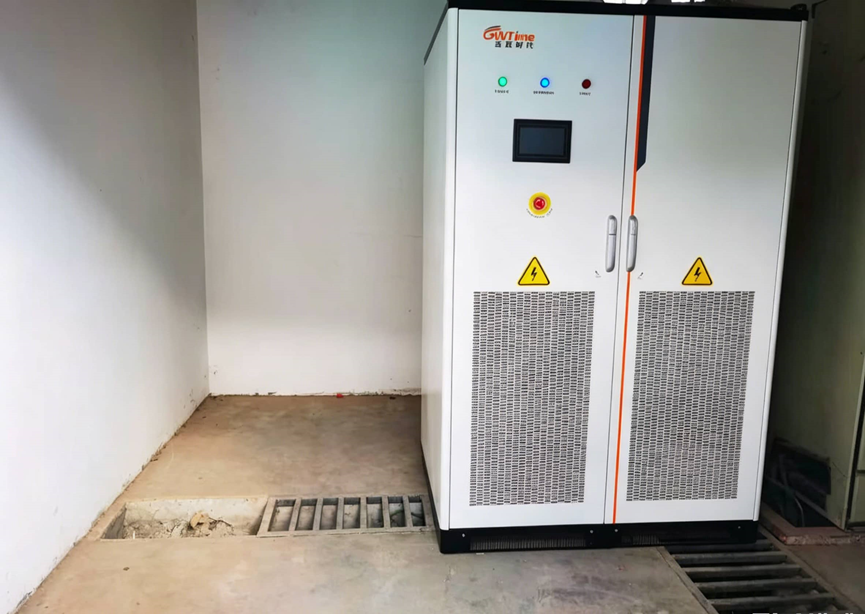
Within the 335 kW hybrid-inverter family, GWTime describes N+1 modular architecture that permits other modules to continue operating when one fails or is serviced. The described feature includes hot-swap maintenance. That module-level provision needs to be read alongside the remaining equipment duty and the installation’s shared connections.
The path from the working modules to the retained load matters as much as their individual availability. An open shared connection can interrupt that path while the modules themselves remain operational. A redundancy review therefore examines both the equipment that can be lost and the resources still required by every surviving module.
Fault detection, isolation and continued supply are also distinct events. Their sequence depends on the applicable equipment arrangement and conditions. The existence of additional modules cannot independently establish how every connected process behaves during a particular electrical event.
Maintenance Temporarily Changes the Equipment Set
A planned service interval starts with a known change: one part of the conversion provision will be unavailable. The load expected during that interval can be compared with the equipment remaining in operation. Timing maintenance during a lower-demand period can leave more capacity available for an unexpected change in the retained load.
Hot-swap capability in the GWTime 335 kW inverter concerns the modular service arrangement. It supplies no universal maintenance procedure for the surrounding installation. Equipment-specific instructions, isolation requirements and the work scope still determine which actions are permitted while other parts remain energized.
Maintenance and a subsequent fault can also consume different portions of the same reserve. Once an additional module has been taken out for service, its capacity is unavailable to cover another loss. The current maintenance state therefore belongs in the capacity assessment used during the work.
Redundancy does not measure how often a module fails. It describes how the arrangement can tolerate a specified unavailability, whereas the duration of that unavailability also depends on diagnosis, access and replacement arrangements.
Two sites with similar module provision can therefore spend different lengths of time in a reduced configuration if their maintenance resources differ. The spare capacity and the restoration plan answer related questions about service continuity over that interval.
Completion of the physical replacement does not alone describe the restored operating state. The returned module has to belong to the intended working configuration before its contribution is counted. At unchanged total load, a returned module taking a share reduces what the other modules collectively must supply.
Reading the Claim Within the Complete Installation
The four-in-one inverter family from GWTime combines PCS, EMS, ATS and electrical-distribution functions within one enclosure. These functions have different tasks even when they share an enclosure. Additional conversion modules address one part of that arrangement; the complete supply path also includes source selection, coordination and the connected battery system.
PV conversion remains external in this GWTime architecture, with MPPT equipment placed towards the array. Its presence adds another equipment boundary to the installation being assessed. The modular converter claim consequently remains attached to the relevant inverter provision rather than becoming a redundancy claim for the entire solar-storage site.
A maintenance plan becomes credible when its retained duty can be carried by the equipment available throughout the work. The module inventory, shared dependencies and scheduled operating conditions together establish that duty’s support. Spare provision retains its value only while those relationships continue to hold during the actual service interval.
